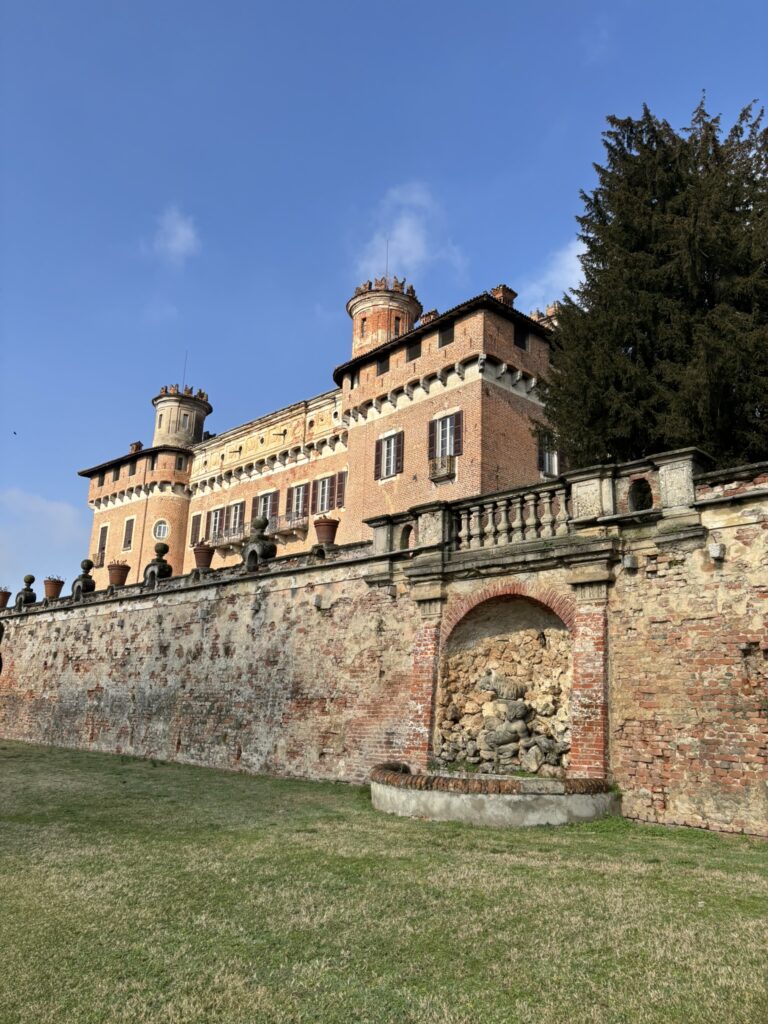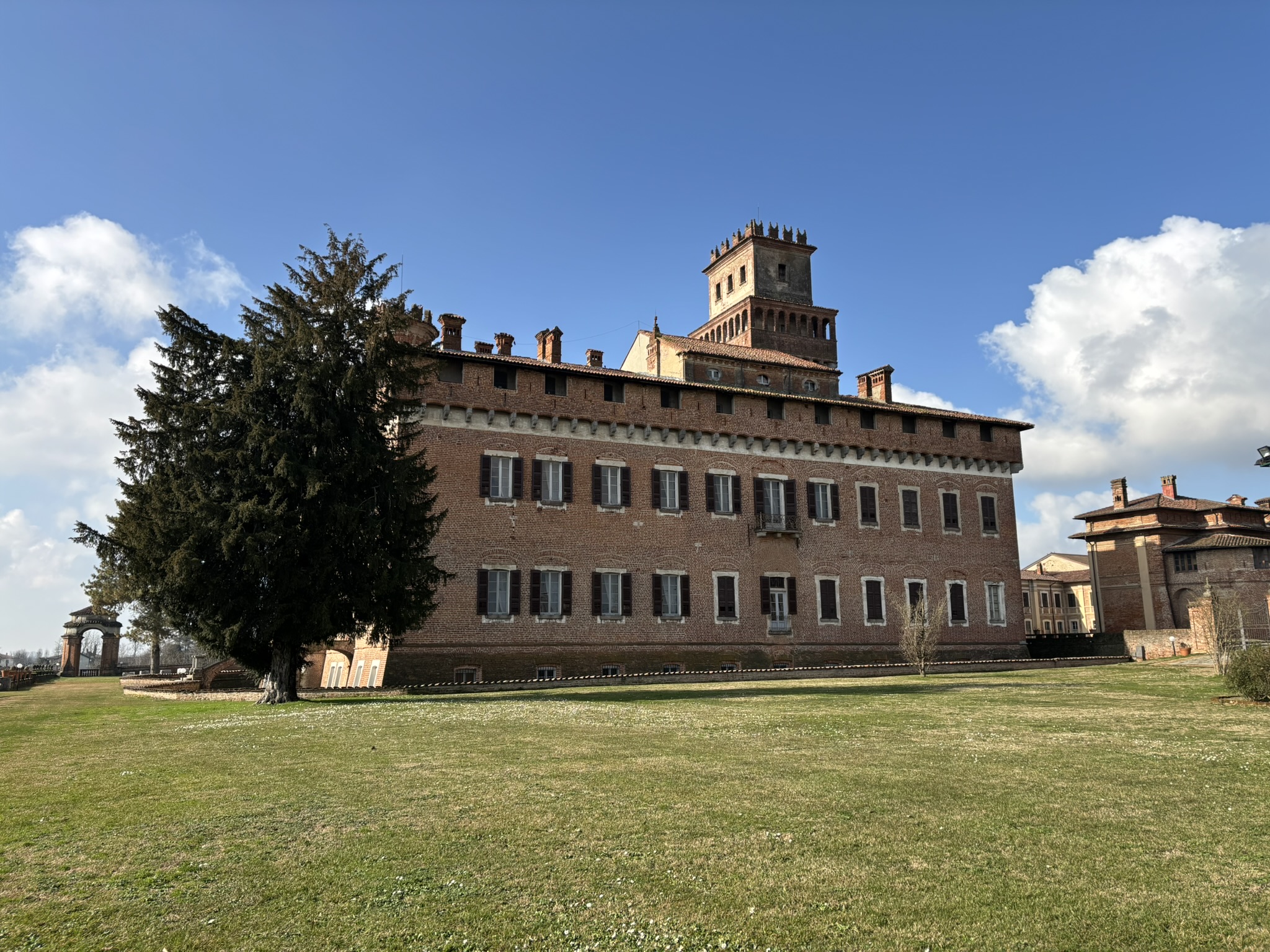
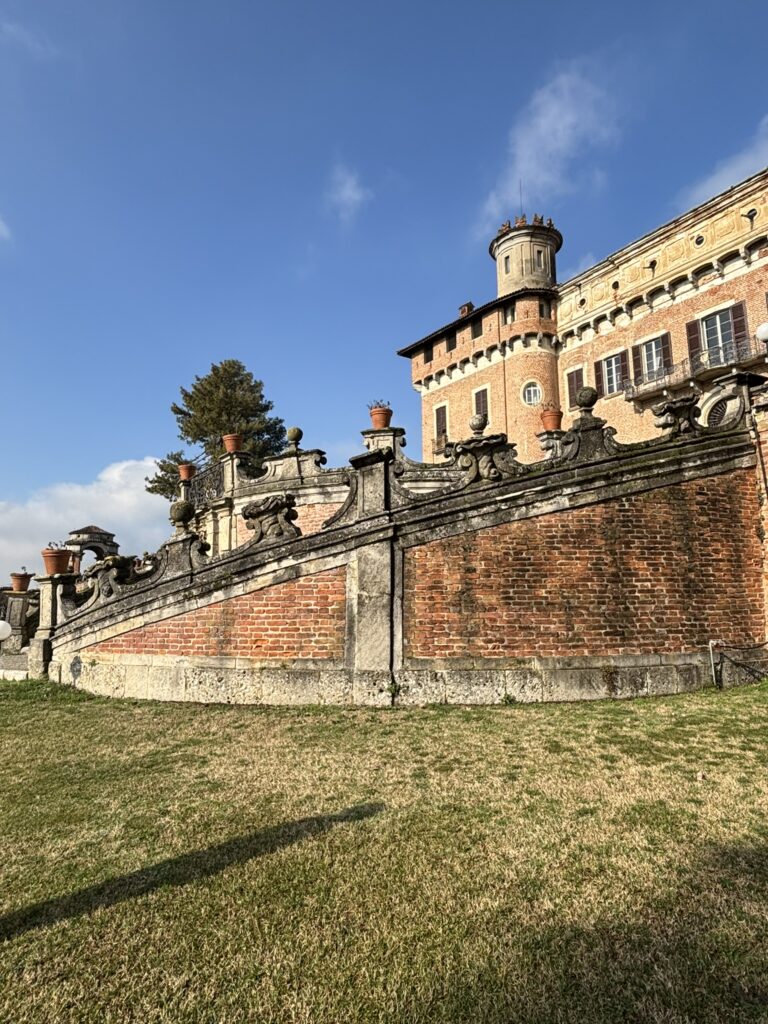
In the plain that stretches between the Po and the Lambro, where the land seems to breathe slowly to the rhythm of the seasons, stands one of the most scenic historic homes in Lombardy: the Chignolo Po Castle. With its towers, moat, and long series of courtyards and gardens, the structure stands as a solemn presence in the landscape of the Bassa Pavese. But behind its eighteenth-century elegance lies a much older history, one of transformations, power, and dynasties that shaped its destiny.
A fortress along the Via Francigena
Its origins date back to the Middle Ages and are closely linked to the strategic position of the place. Chignolo Po in fact rises along the ancient itinerary of the Via Francigena, the great pilgrimage road that connected northern Europe to Rome. As early as 990, Sigeric, Archbishop of Canterbury, mentioned the town as a stop on his journey to the Eternal City, a sign of the area's importance in the medieval road system.
In this context arose a first fortified nucleus linked to the Benedictine abbey of Santa Cristina, with an essentially defensive function: a fortress intended to protect monastic assets and to guard an area exposed to raids and tensions between local powers. During the 13th century, the structure was consolidated, taking on the appearance of a true fortification.
The families of power: Pusterla, Visconti and Cusani
After the monastic period, the fiefdom passed to the powerful Milanese family of Pusterla, one of the most influential of medieval Milan, whose dominion ended tragically in the 14th century, when they were involved in a conspiracy, bloodily repressed, against the lordship of the Visconti.
After this episode, the castle entered the Visconti political orbit and subsequently passed to other feudal families, including the Federicis. The decisive turning point, however, came with the rise of the Cusani, destined to link their name to the most spectacular transformation of the complex.
In the 18th century, Cardinal Agostino Cusani Visconti, a refined diplomat and ambassador to the palace of Louis XIV, profoundly influenced the destiny of the fortress, bringing to Lombardy the taste learned in the great European courts.
From the fortress to the “Versailles of Lombardy”
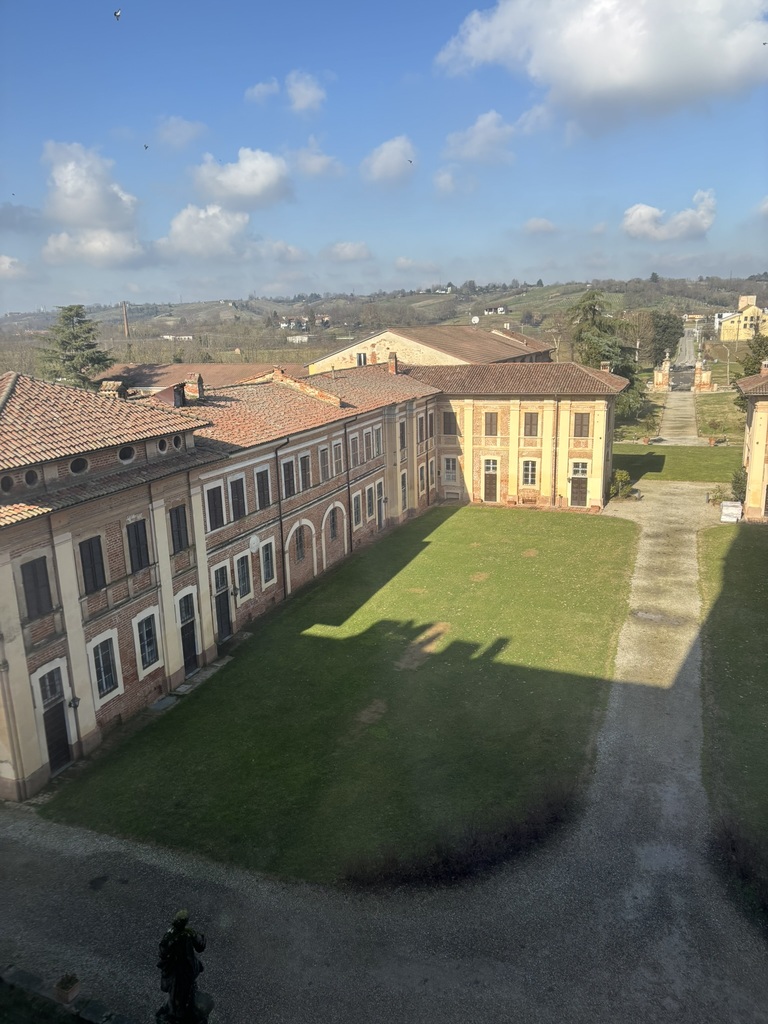
Between 1700 and 1730 the cardinal promoted a vast project of transformation and the severe medieval fortress was converted into a prestigious aristocratic residence in Baroque style. Architects, sculptors, and painters were called upon to redefine the spaces, creating a scenographic complex made up of courtyards, monumental staircases, gardens, and state rooms.
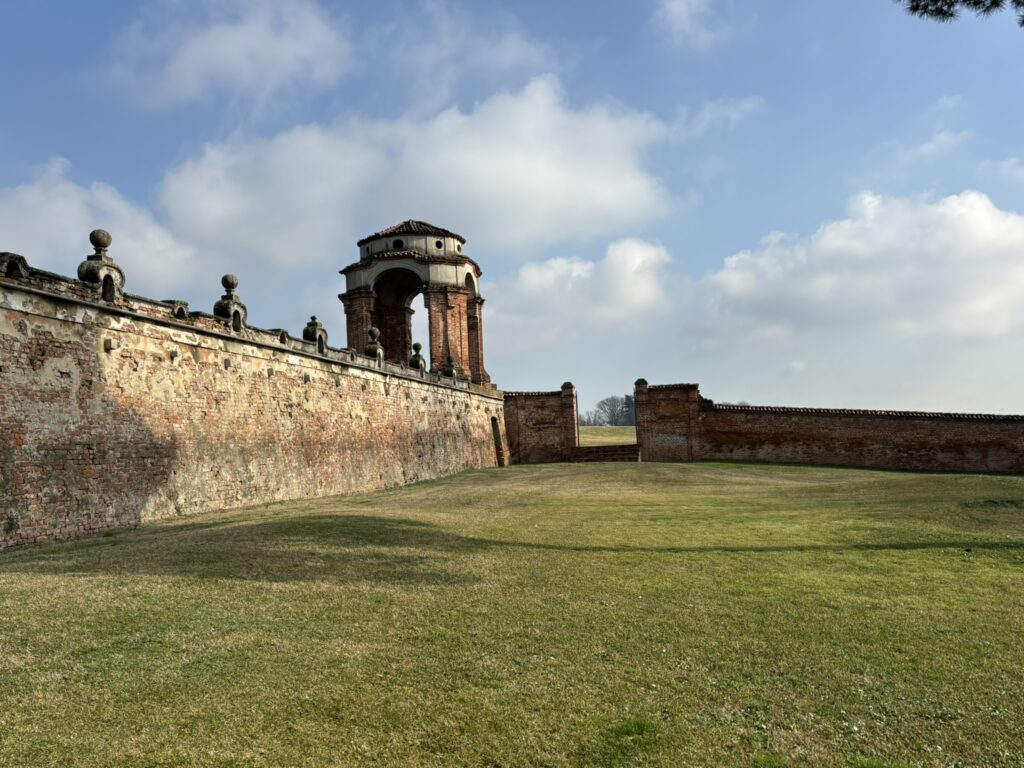
A park of over thirty hectares was designed next to the castle and, in the heart of the garden, the suggestive villa was built Hunting Lodge, intended for parties and receptions. It was precisely this magnificence that earned the complex the nickname "Versailles of Lombardy.".
Illustrious guests and court life
During the eighteenth century the castle became a crossroads of European politics, hosting personalities such as Pope Clement XI, Emperor Francis I of Austria and Napoleon Bonaparte.
The ballrooms, galleries, libraries, state apartments and halls frescoed by artists from the school of Giambattista Tiepolo still today tell of that atmosphere of meetings and alliances between the Lombard nobility and the international elite.
Legends among the towers
Like many European castles, Chignolo Po has also accumulated a series of stories and suggestions over time, which cloak it in curiosity and magic.
The best-known legend concerns a "lady in white"“ who is said to wander the ancient halls at night. There are no historical records to identify her, but the tale continues to circulate among the villagers and visitors, contributing to the aura of mystery surrounding the residence.
Other stories concern the castle's dungeons: according to some local traditions, there were in fact ancient secret passages that connected the fortress with the village or with nearby religious buildings.
 Chignolo Po today
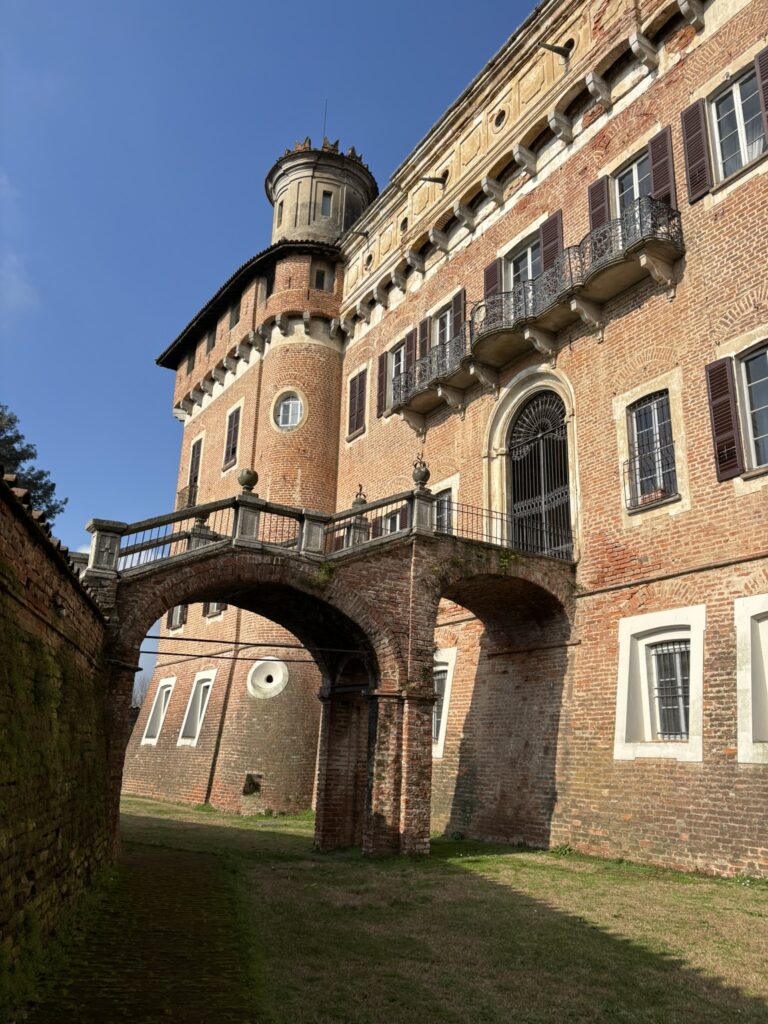
Currently, after the end of the Cusani lordship, the complex passed to the Sovereign Military Order of Malta and was then purchased by private individuals, becoming partly a personal residence and partly a cultural center open to the public, hosting events and an agricultural museum. Visiting the castle today means travelling through the ages: the coexistence between the rigour of the medieval fortress and the ambition of the Baroque palace makes Chignolo Po one of the most fascinating and unexpected testimonies of Italy's historical heritage.