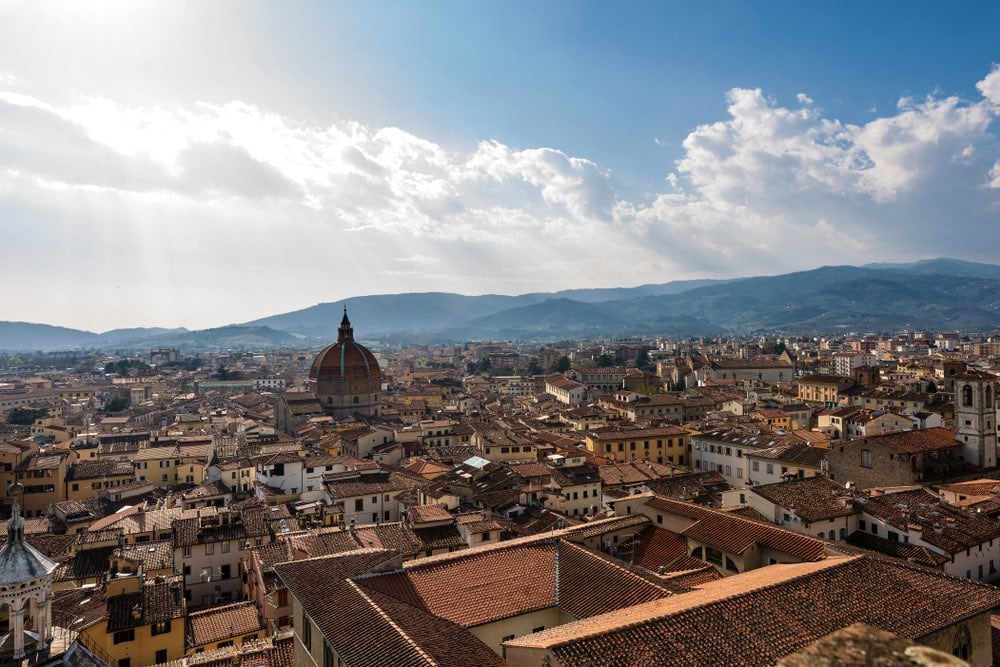
In the heart of Tuscany, nestled between rolling hills and ancient walls, lies the city of Pistoia. Its narrow, winding streets tell stories of a glorious past and traditions passed down from generation to generation. So, is Pistoia worth a visit? Let me start by saying that if you're wondering whether to visit Pistoia during a Tuscany itinerary, the answer is absolutely yes. This city isn't large and is certainly less famous than its illustrious neighbors, but it's truly worth discovering. In the center of the city, there's the majestic Cathedral Square with its splendid Romanesque cathedral, a silent witness to centuries of history. Along the streets of the historic center, you can still hear the sounds of artisans' workshops, which once guarded ancient secrets and skilled crafts. Today, these are no longer present. But it is at night that Pistoia reveals its most intimate charm, when the soft lights of the lamps illuminate hidden corners and the ancient alleys seem to still breathe the atmosphere of times gone by. And so, within the walls of this medieval city, every stone tells a story, every alley hides a secret, inviting visitors to lose themselves among its wonders and be enchanted by its timeless charm. In the warm Tuscan summer, the silent breath of a city that seems suspended between past and present. Along its streets, life flows slowly, while residents still gather in the squares to chat and enjoy delicious aperitifs in the bars scattered throughout the heart of the Sala, and artisanal ice creams. But behind every ancient façade lie surprising stories and unforgettable characters. One day, strolling through the streets of the city center, I came across an elderly gentleman sitting on a bench, his wrinkled face illuminated by the morning sun. He told me he was born and raised in Pistoia, experiencing the joys and tragedies of a city he had watched grow and change over the decades. His words transported me back in time, making me relive the events that had shaped the destiny of this fascinating city.
And so, as the sun set on the horizon and shadows lengthened on the ancient walls, I realized that Pistoia was not just a city, but a place steeped in history, emotion, and mystery, ready to welcome anyone who wishes to discover its most hidden secrets. The city is not large, but it is one of the most beautiful in Tuscany. Founded in the 2nd century BC by the Ancient Romans under the name Pistorium and becoming an important commercial hub in subsequent historical periods, Pistoia is undoubtedly one of the must-see destinations in northern Tuscany. The main square is the Duomo, surrounded by the most important buildings: the Palazzo Comunale, the Cathedral of San Zeno, the Bishops' Palace, the Baptistery, and the bell tower. Climbing the 200 steps of the bell tower, you can admire the city from above, the surrounding mountains all the way to the summit of Abetone—where you can ski in the winter—and, on clear days, even Brunelleschi's Dome in Florence. The Cathedral, which dates back to before the year 1000, is a fascinating architectural mix: it includes ancient Romanesque structures, Renaissance, Baroque, and 19th-century additions. The most valuable piece inside is a silver altar from the ancient chapel dedicated to San Jacopo, patron saint of Pistoia. The Palazzo degli Anziani is the seat of the Town Hall, but also houses the Civic Museum, the first museum in the city. Also in the oldest part of the building is the evocative Hall Square, At its center, the Pozzo del Leoncino (Little Lion's Well) stands out, now home to a daily vegetable market. Characterized by small shops and several trendy eateries, the little lion, placed in 1529 above the architrave of the well, symbolizes Florence's definitive domination of Pistoia. Don't miss the ceramics of the Ospedale del Ceppo, slightly further out of the way but still very close to the historic center. Founded in the 13th century, it takes its name from a tree trunk that miraculously flowered during the winter, which, according to indications provided by an apparition of the Madonna, would have shown the site where it should be erected. The loggia is adorned with a long painted and glazed terracotta frieze created by the Della Robbia family in the early 16th century. The numerous churches also deserve a thorough visit.
The Camino de Santiago.
Five important pilgrimage routes pass through Pistoia, allowing today's pilgrims to discover a region rich in history and culture. Since 1145, Pistoia has been the only recognized center of St. James worship in Italy and has therefore been the destination of a significant influx of pilgrims traveling the Via Francigena, not only towards Rome but also the much more challenging route to Galicia and Santiago de Compostela. The Camino de San Jacopo is an ancient route that connects "little Santiago" (Pistoia) to the true Santiago de Compostela.