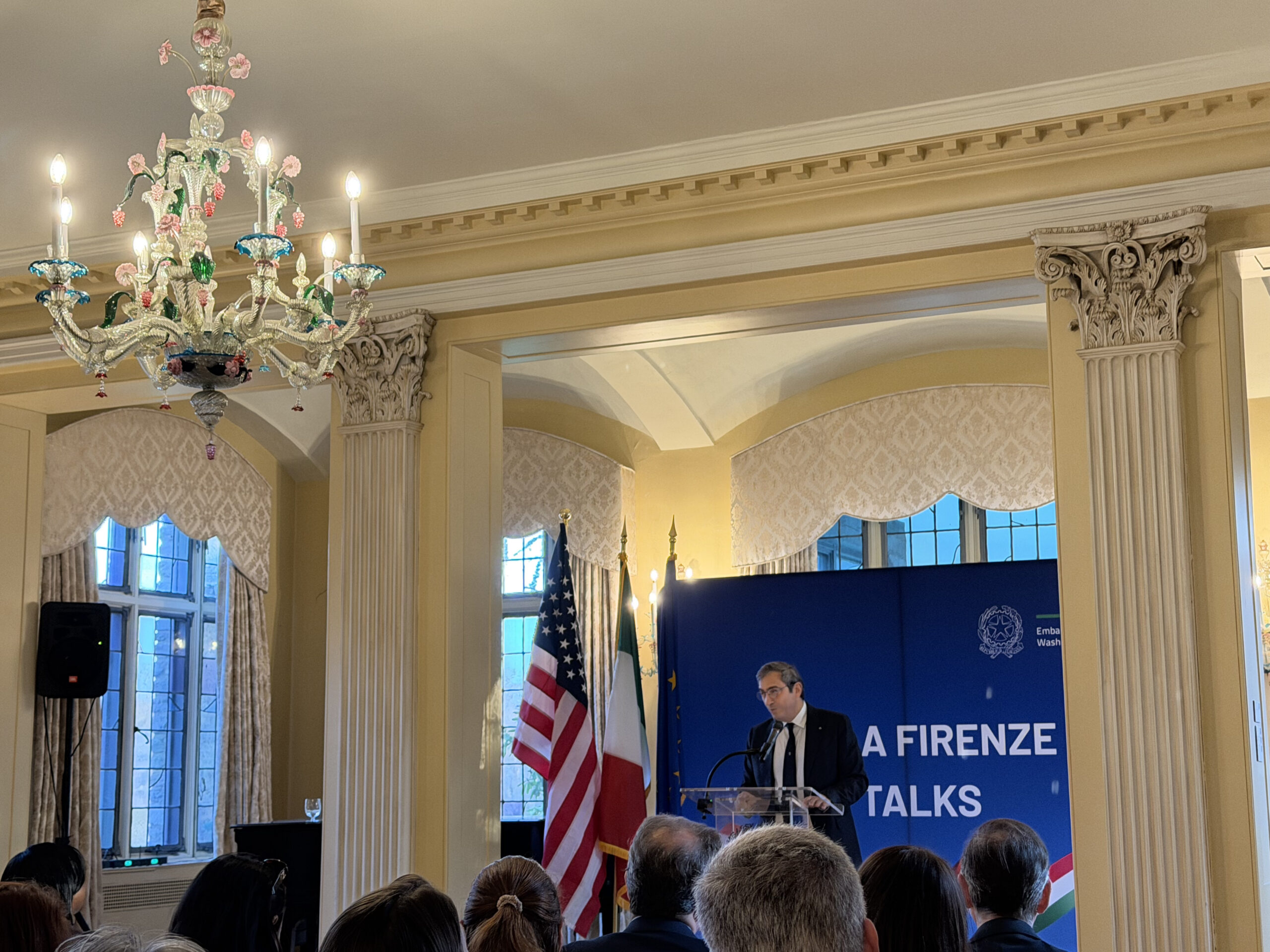
In the elegant setting of Villa Florence, residence of the Italian Ambassador in Washington, a new appointment in the series “Villa Firenze Talks”, dedicated to one of the most crucial issues of our time: healthy longevity. A meeting that intertwined science, politics, and cultural vision, offering a broad and ambitious vision of the future of health.
The Ambassador welcomed guests and speakers Marco Peronaci, who opened the evening by emphasizing how the rise in chronic diseases and healthcare costs requires a profound transformation of healthcare systems. No longer just reactive medicine, but prevention, innovation, and patient proximity: a challenge that Italy and the United States, he emphasized, can address together thanks to their centers of excellence.
The debate, moderated by Esther Krofah, has seen leading figures in international research and journalism as protagonists. Among these, Alicia Jackson, at the helm of the Advanced Research Projects Agency for Health, a symbol of the American avant-garde in biomedical research, and Professor Camillo Ricordi, one of the world's leading experts in transplants and diabetology.
Ricordi offered a rigorous yet visionary scientific perspective: longevity is not just a matter of years lived, but of quality of life. The new frontiers of regenerative medicine, cell therapy, and immune system research are opening up unprecedented possibilities, where it will be possible not only to treat, but also to prevent and even reverse certain aging-related diseases. Central to his presentation was the idea that the human body possesses resources that are still largely unexplored, which science is only just beginning to understand and capitalize on.
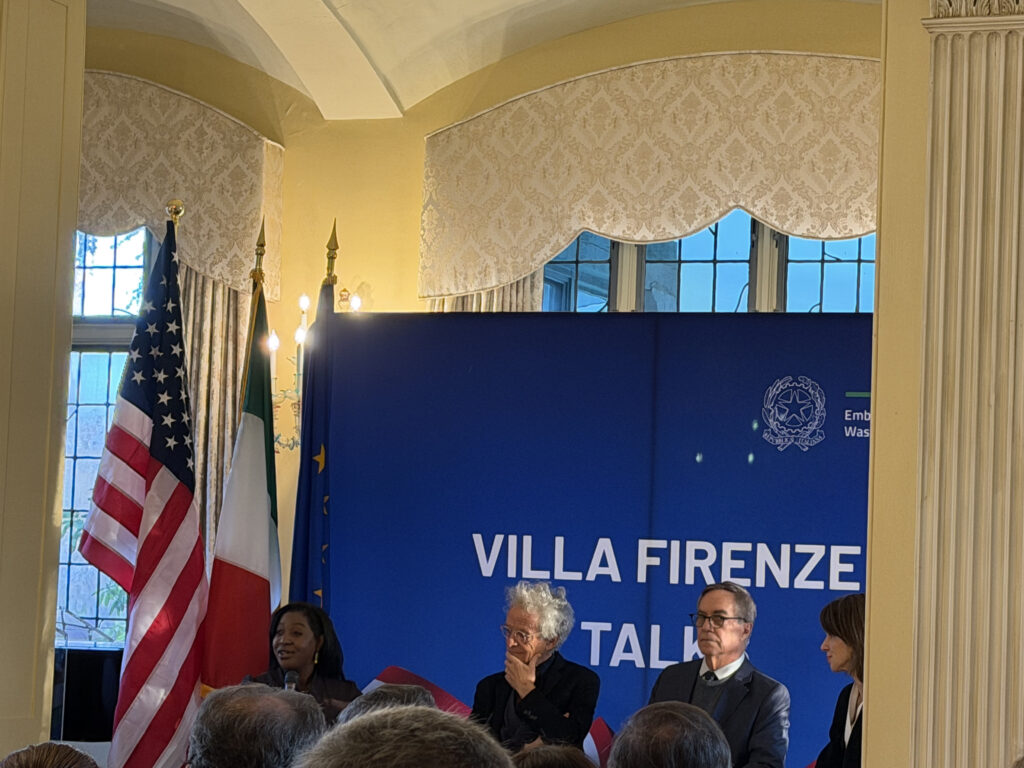
Alongside the voice of science, that of culture and social analysis was brought by Federico Rampini, editorialist of the Evening Courier. Rampini enriched the discussion with a reflection that combined data, international observation, and personal experience. Starting from Japan—a country symbolizing longevity and the subject of his latest book—he described a society in which aging is already a structural reality, but also a laboratory for solutions.
In the Japanese model, he explained, longevity is not perceived as a burden, but rather as a resource. A culture that values the role of the elderly, a balanced diet, an active lifestyle, and strong social cohesion contribute to creating the conditions for living longer and better. But above all, Rampini emphasized an often overlooked element: mental attitude.
His conclusion struck a chord in the packed room of doctors, researchers, and experts: the first true "medicine" for longevity is positivity. Being optimistic, cultivating a confident outlook on the future, maintaining curiosity and an open mind—these, even before technological innovation, are the pillars of a long and healthy life.
The discussion also touched on key topics such as artificial intelligence applied to early diagnosis, nutrition as a prevention tool, and the need to integrate scientific research and public policies. A clear common thread: the shift from a disease-centered to a health-focused healthcare system.
The evening thus transformed into something more than a simple debate: a laboratory of ideas, in which different disciplines engaged in dialogue to outline a possible future. A future in which living longer doesn't simply mean adding years to life, but life to years.
And a strong message came from Villa Firenze: longevity, when guided by innovation, awareness, and vision, is not a challenge to be feared, but an opportunity to be seized. With a positive outlook—as Rampini reminded us—which ultimately remains the first step toward a longer and better future.