


A Peter Gargano, then head of department of The Morning, they had taught that newspapers, the next day, end up becoming '‘cuoppi for the olives’'. A disarming truth about the ephemeral nature of printed paper, destined to lose value within a few hours. But the November 26, 1980, that rule was broken by a title that became immortal: HURRY UP. Born as a cry of desperation and a plea for help for the people affected by the earthquake in Irpinia, that title didn't just tell a story. Thanks to the gallery owner's vision Lucio Amelio and to the genius of Andy Warhol, was transformed into a famous work of art, a universal symbol capable of keeping alive the memory of a tragedy and of an extraordinary collective strength.”
Hurry Up: The Title That Became a Cry for Help and a Work of Art
It was the afternoon of the third day after the earthquake that had devastated Irpinia and much of Campania. In the rooms of Via Chiatamone 65, the historic headquarters of Il Mattino, the air was filled with tension, fatigue and a sense of duty. The journalists and editors worked tirelessly, intent on reporting a tragedy that was becoming more and more apocalyptic, hour after hour. Among them, Peter Gargano, a news editor with a clear gaze despite his tiredness, suggested those two words that would mark the history of Italian journalism: Hurry up.
It wasn't just a headline. It was a cry of alarm, a desperate plea addressed to the entire country. That day, the director Roberto Ciuni He took Gargano's suggestion and transformed it into a manifesto. Two simple, clear words, prominently displayed on a meticulously crafted front page. The choice of font, the layout of the text, the color scheme: everything contributed to giving strength and urgency to that message, so that it would resonate beyond the borders of Campania.
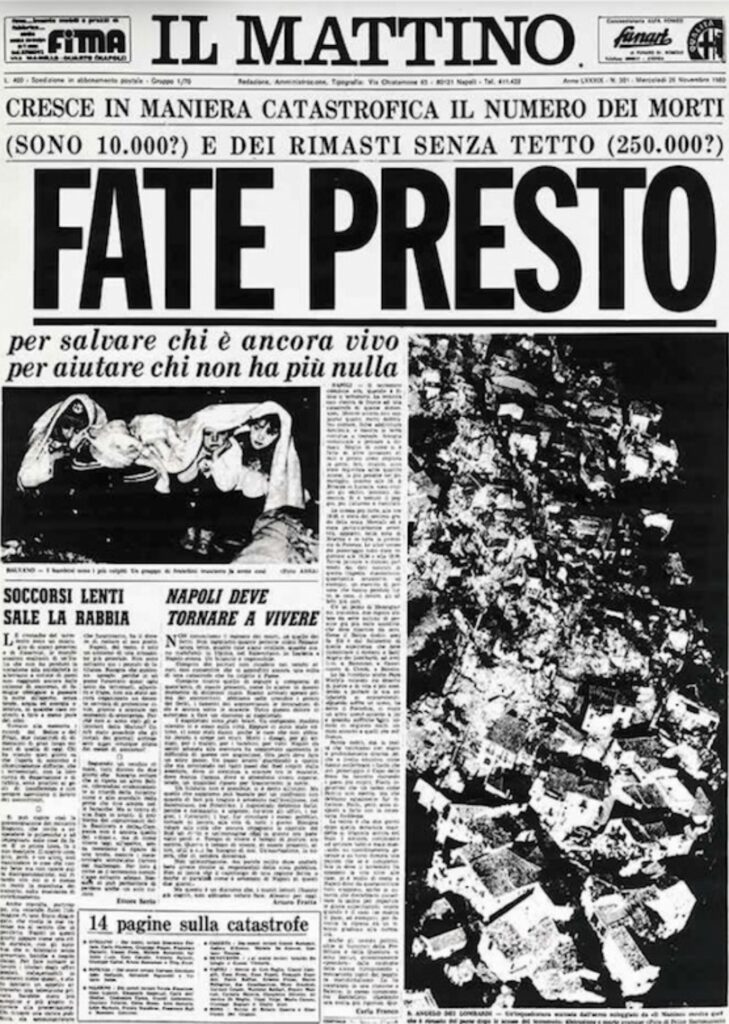
In those years, journalism was a very different undertaking than it is today. There were no smartphones, social media, or instant breaking news. Every update arrived breathlessly, after interminable phone calls or radio appeals. The news were fragments of a reality that was slowly taking shape, between communication difficulties and impassable roads.
The signature of the article accompanying that title was entrusted to Carlo Franco, one of the great pens of Neapolitan journalism, recently passed away, but the real protagonist remained that cry on the front page: HURRY UP.
The history of that title is the living memory of a moment in which journalism, art and history met to never forget.
Those two words not only struck Italy, but became a universal symbol thanks to the gallery owner's intuition. Lucio Amelio. Amelio, a key figure in contemporary Neapolitan art, wanted to give voice and form to that tragedy through art.
A Neapolitan gallery owner and patron of the arts, he had the intuition that the tragedy and its media coverage could and should find new life through the universal language of art. He was a visionary, capable of reading signs in the chaos of the contemporary world that could be transformed into artistic expression. It was precisely this spirit that drove him, a few months after the earthquake, to fly to New York and to reach Andy Warhol in his legendary Factory.
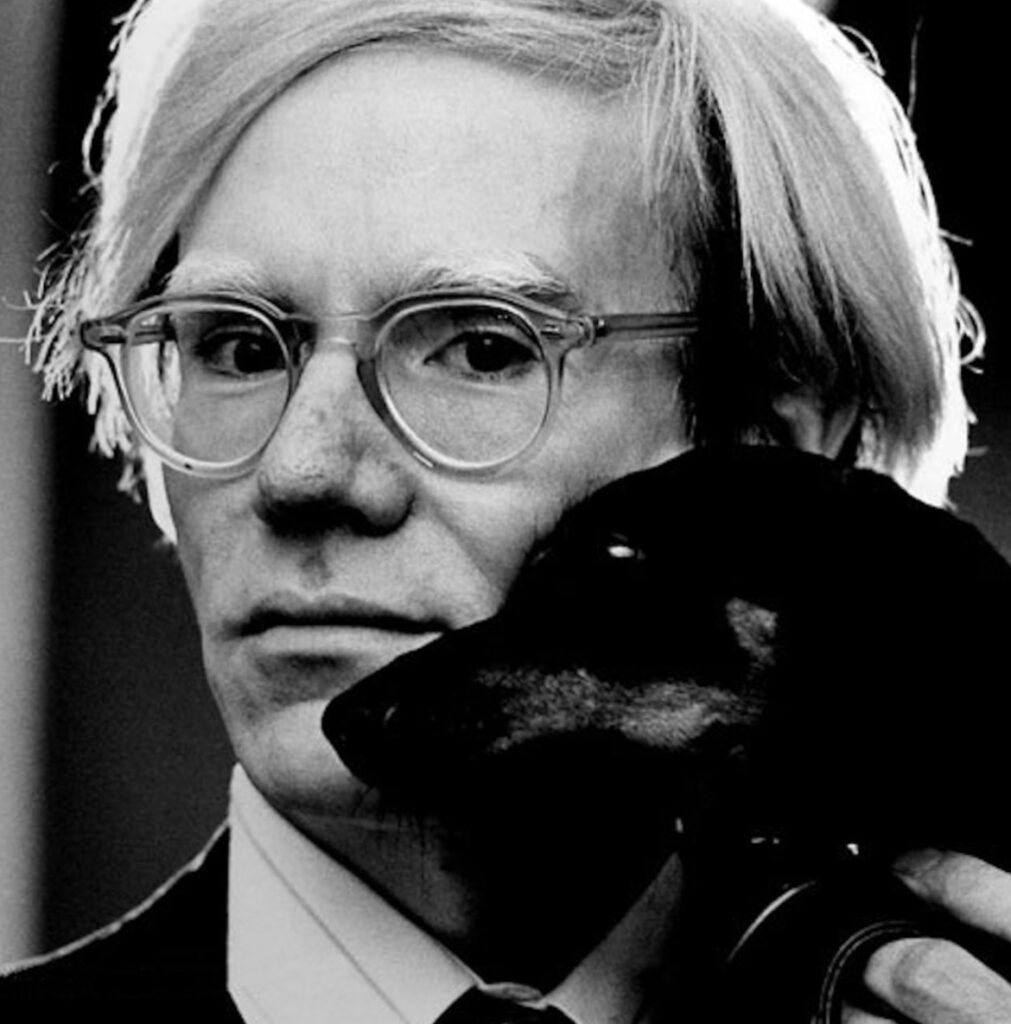
Thus was born Fate Presto, an imposing triptych that amplifies the urgency and pain of that title. Included in the collection TerraeMotus, the work not only recounts the drama of the earthquake, but restores to journalism its power to immortalize events that would otherwise slip away in time.
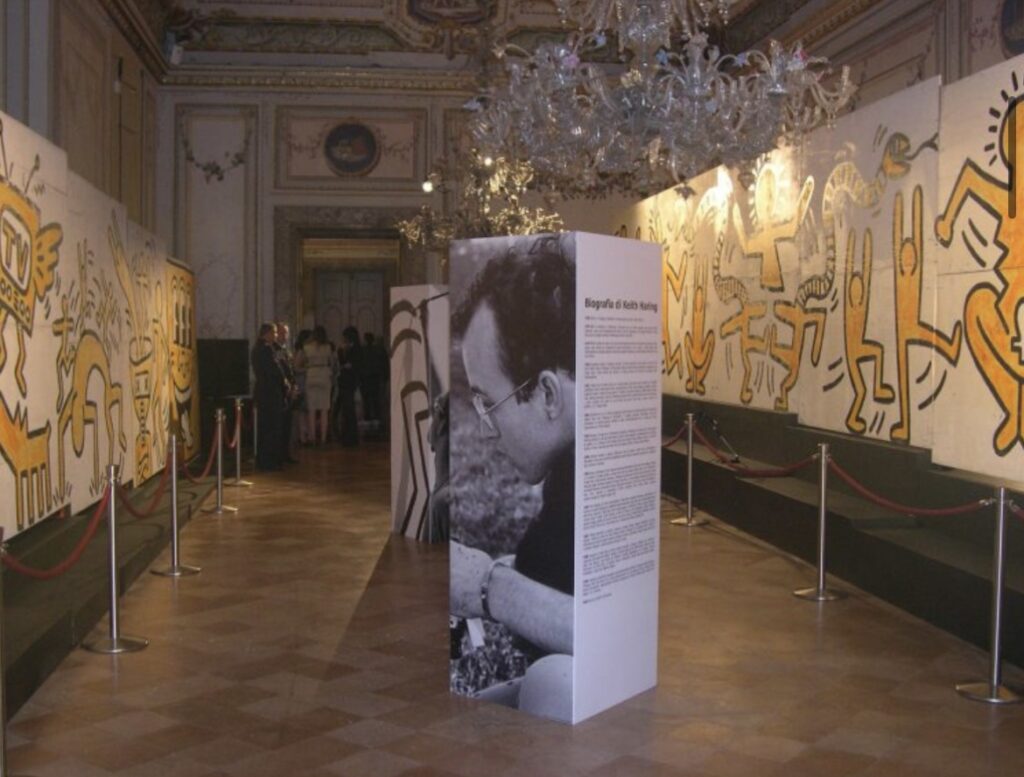
What was an ephemeral page of a newspaper became an icon, a work still exhibited today in the Royal Palace of Caserta, witness of a tragedy that marked the history of Southern Italy and the country as a whole.
That echo of pain and hope, born in the rooms of Via Chiatamone, has transcended borders and generations. Hurry Up is no longer just a title: it's the living memory of a moment when journalism, art and history met to never forget.
Amelio already knew Warhol, having met him in Naples a few years earlier, when the American artist had visited the city at his invitation. But this time the meeting took on a different meaning: it was not a simple cultural exchange, but a a request that combined art, news and history.
Lucio brought with him a bundle of Italian newspaper clippings, among which that front page of the newspaper stood out. The Morning of November 26, 1980. The title Hurry up dominated in bold, flanked by devastating images of the earthquake. Amelio explained to Warhol the meaning of those two words: not just an urgent appeal, but the symbol of a wounded land that asked not to be forgotten.
Warhol, master of transforming the pop culture and media symbols in works of art, he was immediately struck by that page. For him, newspaper headlines were much more than just news: they were icons of our time, capable of crystallizing collective emotions. He decided to accept Amelio's proposal and work on that first page, transforming it into a monumental triptych.
In the following weeks, Warhol experimented with formats, colors, and tones to amplify the original message. He remained faithful to the graphic composition of the newspaper, but emphasized the visual impact with its typical chromatic contrasts, making the even more penetrating, almost screaming letters. The result was Fate Presto, a work that not only recounted the natural disaster, but also spoke of a universal suffering, capable of transcending geographical and cultural boundaries.
Amelio and Warhol realized that the title had taken on an iconic dimension: it was no longer just the cry of a population struck by the earthquake, but a call for all humanity to react in the face of tragedies. The triptych became one of the central pieces of the TerraeMotus collection, wanted by Amelio to tell, through art, the earthquake and the regenerative force of culture.
The meeting between Lucio Amelio and Andy Warhol consolidated a unique bond between the American artist and Naples, a city that Warhol later celebrated with his famous series Vesuvius. But Fate Presto remains the work that more than any other embodies the’meeting between journalism, art and social commitment, reminding the world that behind tragedies there are always voices demanding to be heard.
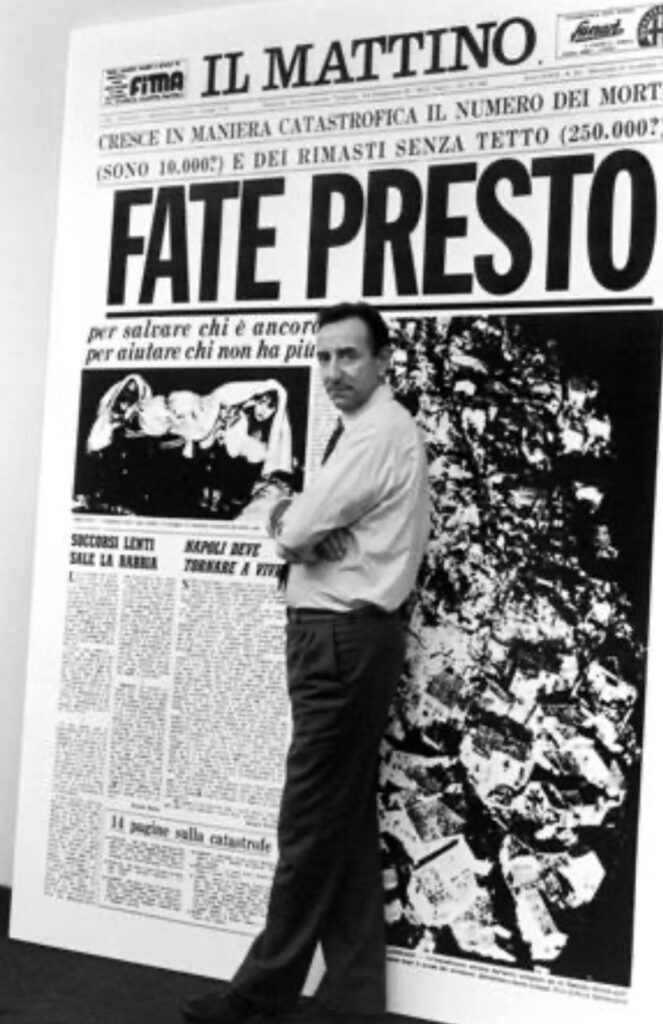
The exhibition TerraeMotus, conceived and curated by Amelio, was born as an ambitious project, capable of uniting the voices of some of the greatest contemporary artists to reflect on the drama of the 1980 earthquake. Officially presented in 1984 in the splendid setting of Villa Campolieto in Herculaneum, the collection initially included the works of 66 international artists. The project represented a unique cultural operation: not a simple homage or commemoration, but a dialogue between art and the destructive and regenerative force of nature.
Among the protagonists of the collection were prominent names such as Robert Mapplethorpe, Mimmo Paladino, Tony Cragg, Enzo Cucchi, Luciano Fabro, Gilbert & George, Gerhard Richter, and Emilio Vedova. Each artist offered their own interpretation of the earthquake, transforming the physical and moral rubble into visual metaphors that prompted a collective reflection on the fragility of existence.
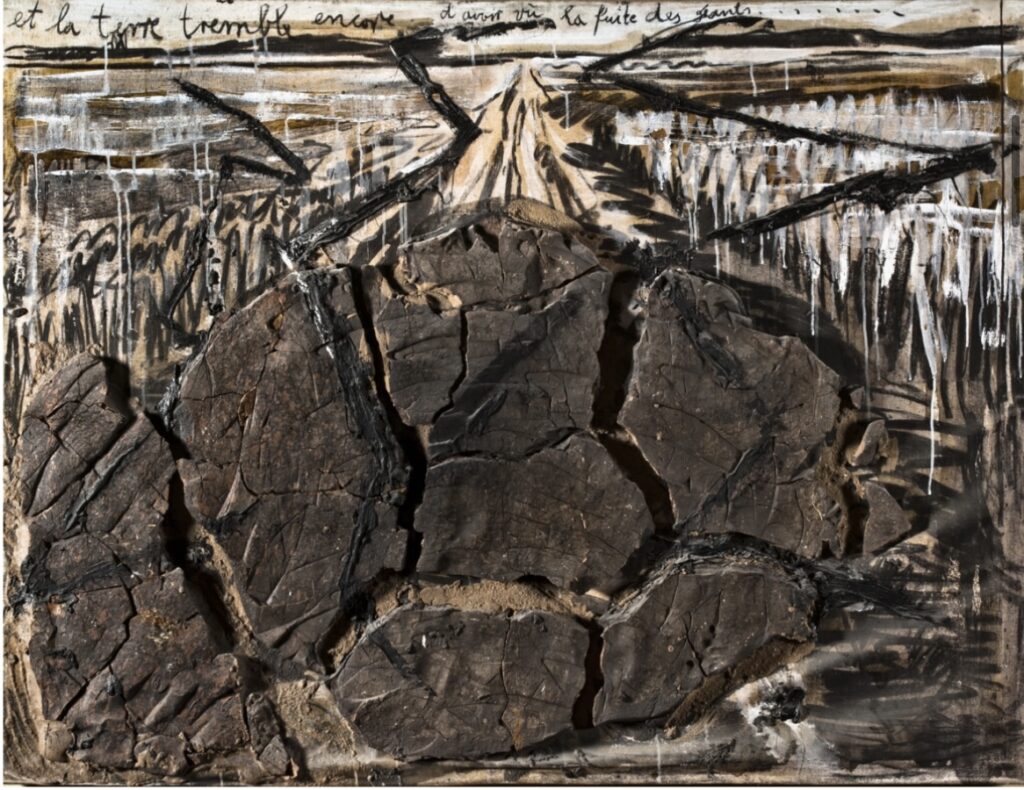
Andy Warhol's triptych "Hurry Up" became the exhibition's poster, thanks to its ability to synthesize the power of the front page's title into a universal visual cry. Along with Vesuvius, which Warhol created a few years later, The work testifies to the strong bond between the American artist and the Campania region.
TerraeMotus was conceived as a travelling collection: after its debut at Villa Campolieto, the exhibition travelled to some of the main European cities, attracting the attention of critics and the public. 1994, a decade after its first exhibition, the collection found a permanent home in the Royal Palace of Caserta, inside the historic apartments. Today, TerraeMotus is one of the most prestigious contemporary art collections in the world, a symbol of cultural resilience and rebirth through beauty.
With the title H7 — where the H symbolizes the earthquake (Heliotremor) and the 7 represents the destructive intensity on the Mercalli scale —The project also sought to underscore the close connection between art and science, inviting a deeper understanding of the catastrophe. The works, each different in technique and language, converge to tell the story of an event that belongs not only to the memory of a single region, but to humanity as a whole.
Lucio Amelio he thus managed to transform mourning into creation, giving life to a collection that continues to excite and question, reminding us that art is a powerful tool for understanding and overcoming pain.
In a world where news often fades in moments amidst the incessant stream of notifications, Hurry Up requires us to slow down and reflect. It's a call to don't forget the value of life and the importance of leaving no one behind, especially in the face of tragedies that still shake the foundations of our communities today.
Transformed into art by Andy Warhol, that title has freed from its temporality, finding a new dimension in which it not only recounts a past drama, but becomes a symbol of every collective emergency: from the climate emergency to humanitarian crises. It is the cry of those who ask to be heard, of those who hope that solidarity is never a memory, but a daily commitment.
And so, even today, 44 years later, those capital letters cry out from the monumental canvases, stirring the conscience of those who view them. Hurry, hurry, doesn't just belong to the history of Irpinia or the rooms of a museum: it's a message for all of us, a warning that makes us think, reflect, and, hopefully, act. Even after 44 years, it's a voice that makes noise, more current than butthe.
The exhibition: https://reggiadicaserta.cultura.gov.it/terrae-motus-40-anni/


