There are stories that tell of dreams, others of sacrifice and passion. That of Salvo Saieva It is a perfect mix of both. Originally from Plain of the Albanesi, in the province of Palermo, a town that proudly preserves its language and Arbëreshë traditions, Salvo has built a high-level academic and professional path, bringing with him a strong bond with his roots.
He arrived in the United States in September 2015, driven by the desire to grow and deepen his research in the field of neurodegenerative diseases, with a particular focus on Alzheimer's. After eight years at Galveston, during which he obtained a PhD in 2021 and began his research career, today he is a post-doc at the UT Health Of Houston and an established researcher in his field.
Alongside his academic career, Salvo has never stopped caring about his community. Already active in the Houston Democratic Party Circle, in 2021 he was elected to the Houston Committees, and becomes its treasurer, following the resignation of Christian Di Sanzo (in the meantime elected deputy in the foreign constituency of North and Central America), Salvo decides to run and is elected, thus becoming the incumbent president of the Comites.
His vision for the Italian community in Texas Her mission is clear: to create connections, offer support, and enhance the contributions of Italians abroad. Through her commitment, she has promoted high-impact initiatives, demonstrating that expatriation isn't just a separation, but also an opportunity for growth and exchange.

Houston is a fast-growing city with many opportunities, but what are the main difficulties an Italian encounters when moving here?
Houston is an extremely dynamic city and full of opportunities, but like any major American metropolis, it presents challenges for those arriving from Italy. One of the first difficulties Italians encounter is adapting to a cultural and social context that is very different from Europe. Here, for example, mobility is completely different: public transportation is limited, and owning a car becomes almost a necessity. Even the opening hours of shops and restaurants can seem unusual to those accustomed to Italian flexibility. Then there's the climate: Houston has very hot and humid summers, a detail that can be difficult to manage, especially in the early stages.
Another key aspect concerns bureaucracy and job placement. Many Italians come here to study or work, and understanding the American system, from visa procedures to tax regulations, can be complicated. But the real change is often linked to mentality: in United States Networking is essential, and building a network of professional contacts is crucial to success.

What are the main needs of the Italian community in Houston?
One of the most felt needs of the community was to have a point of reference, a meeting place where they could create connections and receive useful information. Over the years, Comites has worked extensively on this aspect, offering newly arrived Italians clear guidance on bureaucratic procedures, job opportunities, and daily life in Houston. Our goal has been to build a support network which helps new arrivals to integrate more easily and feel part of a community, through an updated website and two important tools: the citizen's help desk, where citizens can contact us for information, and the list of professionals who speak Italian, to help those with specific needs.
What kind of collaboration exists between the Comites and the Consulate?
The Comites works in synergy with the Consulate To ensure ongoing support for the Italian community. The Consulate is a key institutional point of reference, and the Comites (Committees) works closely with it to facilitate communication and provide useful information to Italians. Thanks to this collaboration, many people have found concrete assistance in navigating the various aspects of life abroad. We provide citizens with all the information they need to better navigate their lives and, if possible, facilitate access to consular services. Our role is to act as a link between the community and the institutions, working together to improve the experience of Italians in Houston and beyond. A concrete example is the logistical support provided to the Houston Consulate, which has enabled Italians in the area to: Austin to renew the passport during the so-called "“days of the traveling official“, without having to go to Houston.
We also organize welcome events, information meetings and networking moments to facilitate contact between those who have been here for a long time and those who have just set foot in Texas. One of the aspects we work on the most is the creation of a cohesive community. Being far from Italy doesn't mean we have to give up our connection to our culture and traditions. For this reason, we promote cultural events and gatherings that strengthen our sense of belonging.

What are the plans to strengthen ties between Italy and the United States?
In addition to providing immediate support, the Houston Committees has developed long-term projects to strengthen ties between Italians in Texas and their country of origin. One of the most important projects was the creation of a network of researchers within the constituency consular of Houston, an ambitious initiative that has obtained funding of approximately 40,000 dollars by the Ministry of Foreign Affairs. We are the only Comites, besides the one in New York, to have received funds for the so-called "“special projects“This achievement, of which I am particularly proud, has allowed us to connect Italian researchers working in various fields, not only in academia but also in corporate research and development, with thematic meetings on highly relevant topics such as mental health, psychiatric illnesses, alcohol and nicotine addiction, Alzheimer's, and cancer.
Houston is home to some of the most advanced research facilities in the world, such as the Texas Medical Center, and it is essential that Italians working here have opportunities to exchange ideas and collaborate.
We have hosted internationally renowned experts, fostering stimulating debates and fostering synergies between academia and industry. We will continue to develop these meetings with the aim of strengthening the role of Italians in the global scientific community.
The idea was born from the awareness that many Italians work in the research and development sector, but often operate independently without any connection to other professionals in the sector. We therefore created a platform to facilitate networking, sharing experiences, and organizing events on topics of great interest.
The projects, developed in collaboration with the’ISSNAF( Italian Scientists and Scholars in North America Foundation ), has given rise to a series of high-profile meetings, ranging from scientific and medical research to general culture. These include events with the writer Andrea Bajani and with the professor Alessandro Carrera, director of the Department of Languages of the’University from Houston. We organized a meeting with the singer with the latter. Amanda PascalI, an Italian-American artist with a complex and multifaceted identity.
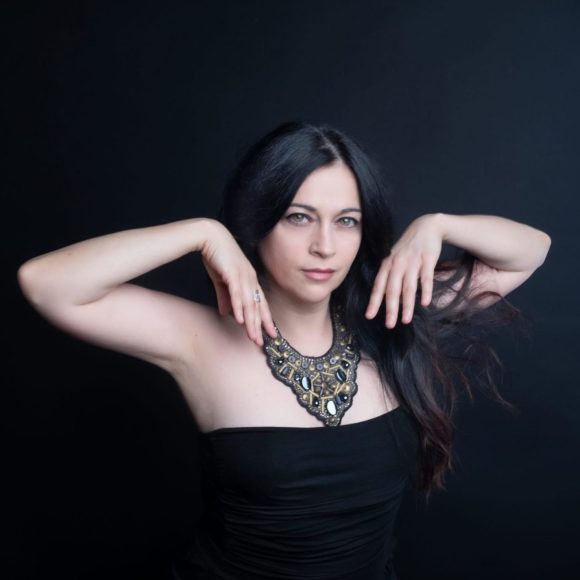
During the event, Pascali presented his English translation of the songs of Rosa Balestrieri, an icon of Sicilian music. For me, hearing my dialect become a bridge between different cultures was a deeply moving moment, a symbol of the intertwining of roots and new experiences that characterizes the journey of many Italians abroad.


What new initiatives are taking shape for the future?
The focus of Comites is increasingly oriented towards supporting Italians in their journey professional and personal, as well as cultural enrichment. Upcoming projects include meetings dedicated to job interview strategies, with the participation of experts, and networking events. We are also planning events on cutting-edge topics such as aerospace, nanotechnology, and stem cells. Finally, we are planning events with Italian writers and journalists.

How would you describe Houston to someone who doesn't know it? What are the most surprising aspects of the city?
Houston is a city that surprises everyone who arrives. From the outside, many imagine it only as a large industrial center, but in reality it is one of the most multicultural of the United States. Communities from all over the world live together here, and this is reflected in daily life: from international cuisine to cultural events to the variety of languages spoken on the streets.
From a work point of view, it is a city full of opportunity, Thanks to the presence of key sectors such as energy, medicine, and aerospace. Sure, the summer heat can be challenging, but the quality of life is high, with well-served neighborhoods and excellent services.
Houston is often associated with a conservative image, but it's actually a very open and multicultural city. It's a perfect example of how a city can be different from the stereotype it's portrayed as. Texas has a conservative reputation, but Houston is a city. cosmopolitan, open and inclusive. This is due to the presence of large international institutions, such as the NASA and the Texas Medical Center, which attract talent from all over the world.
People often talk about a "brain drain." Do you recognize yourself in this definition?
I don't particularly like this definition, because it suggests a net loss for Italy. I, on the other hand, think it's more accurate to talk about a brain circulation. My move to the United States wasn't a complete break with my home country, but rather an opportunity for personal and professional growth. Those who choose to live abroad do so to grow and bring value, while maintaining a connection with Italy.
How do you keep your connection with Italy alive?
I left Italy, but the connection to my homeland is still strong, and always will be. The work we do as Comites is also a way to maintain a bridge between Italians abroad and our homeland, creating connections and opportunities for those who live here but want to stay connected to their roots. Many Italians working in Texas, and in the United States in general, did not leave Italy out of necessity, but because their professional paths brought them here. It would be important to encourage greater collaboration between Italy and the United States, because we don't have to think about the’'emigration not only as a separation, but as an opportunity for exchange, growth and mutual enrichment.

Do you see a return to Italy in your future?
I'm not ruling out any possibility, but for now my life is here. Italy is home, but Houston has become a part of me. I built my career here, my friendships, my daily life. It's hard to say where I'll be in five or ten years, but I know the bond with my homeland will never be broken. I keep it alive every day, even in the little things. I'm a huge sports fan, and like every good Italian, football is in my DNA.
In my free time, I follow my favorite team, Juventus, and I try to never miss a Formula 1 race. Then there's cooking, which for me is a way to feel at home. I enjoy cooking traditional Sicilian dishes, but also experimenting with new recipes. When I can, I devote myself to reading and listening to podcasts, because I believe that continuing to learn is essential. These are the little rituals that make me feel close to Italy, even thousands of kilometers away.
Salvo's passion, his vision, and his tireless work demonstrate the importance of having leaders who can act as bridges between Italy and the United States. Thanks to people like him, the Italian community in Houston is not just a collection of individuals, but a true family, united by the desire to preserve their identity and look to the future with confidence.