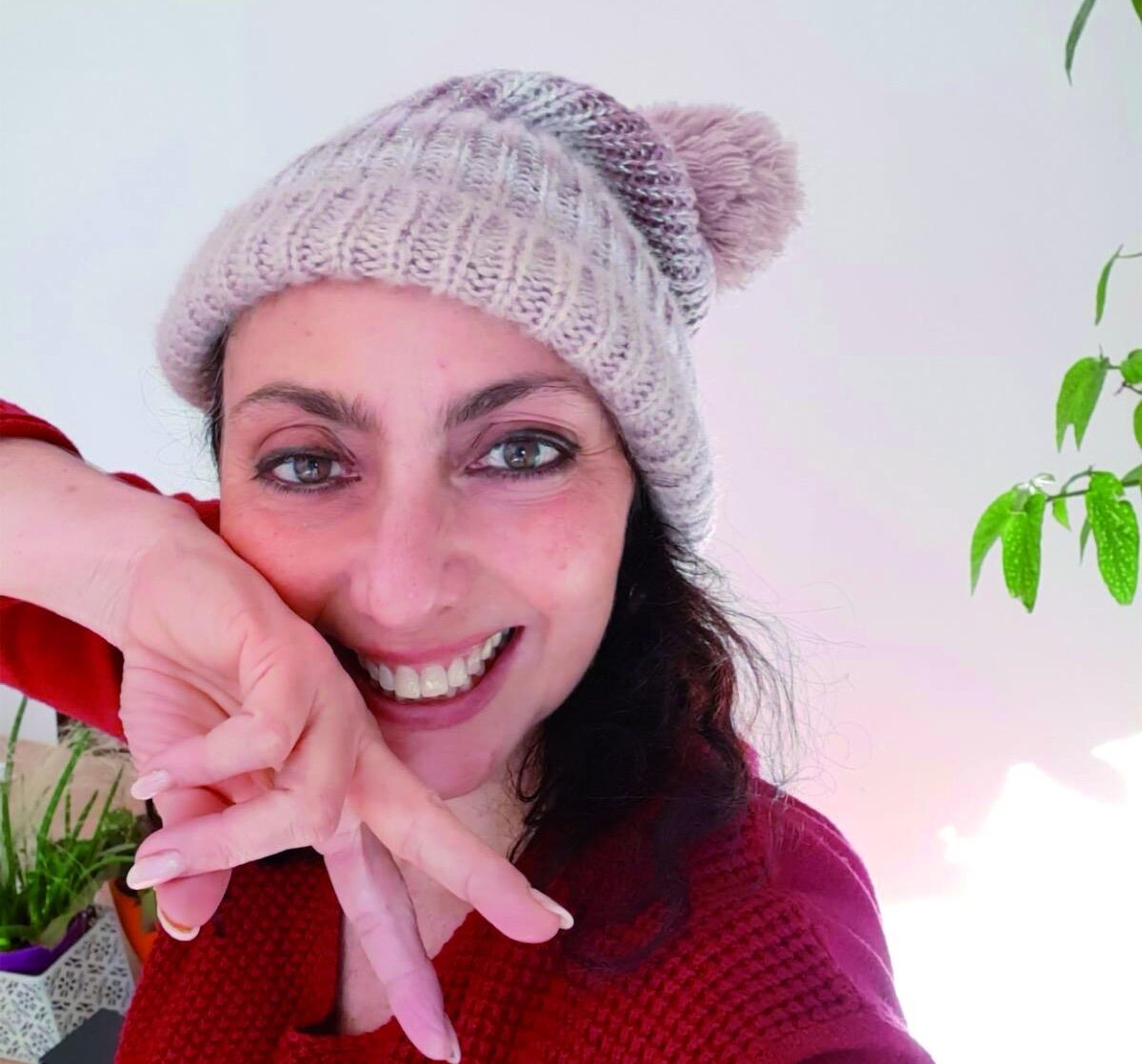
Candidate for theeightieth edition of the Strega Prize, the most prestigious literary award in Italy and always a point of reference for contemporary fiction, Paola Dell'Erba enter the cultural debate with Penultimate Wish (Graus Editioni), an intense and layered novel that questions the relationship between memory, pain and language.
At the center of the story is Virginia Stella, A former religion teacher scarred by a traumatic family history and the mysterious death of her sister in the suburbs of Naples. On the brink of existential collapse, the protagonist attempts to reconstruct the meaning of her life through writing an autobiography. But what begins as an organized project quickly transforms into an open diary, where the present erupts and undermines any possibility of definitive closure.
The novel is both a journey through trauma and a radical reflection on the power and limits of speech. In this unstable space, where language can both wound and save, the possibility of a meaning unfolds that no longer coincides with absolute certainties, but with a fragile and stubborn quest for survival.
In this interview, Dell'Erba discusses the book's genesis, the relationship between writing and truth, and the significance of a candidacy that brings his voice to the attention of a wider audience, even beyond Italy's borders.
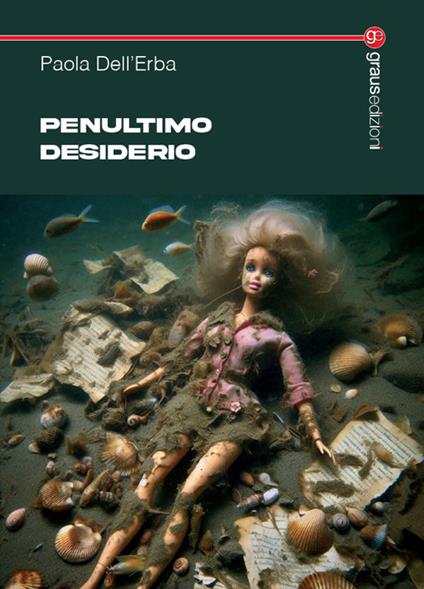
“Penultimate wish” This is your first novel. Where did this book come from? Was there a specific moment, image, or urge that sparked the writing process?
Actually, I had already published a novel in 2019, entitled Pigment Blue 29. The color of the impossible, with the publisher Albatros, but due to the outbreak of the Covid pandemic, it was impossible to promote the book. Despite its completed form, it remains, at least for now, a book on the shelf.
Virginia Stella's story took shape in reference to news events that occurred in the suburbs of Naples in the 1980s and that affected people close to me. Unbeknownst to me, over time I had unconsciously lived with the mysterious and nebulous image of a woman to whom I no longer knew a name or appearance, and who was slowly, without my even realizing it, transforming into a character in a book. Virginia's background is, for me, generally speaking, a "familiar" one: my grandparents, like Virginia's, were evacuated after the war from the former Italian possessions in the Dodecanese, including Rhodes, and like so many others, were placed in various refugee reception centers across Italy. In 1955, after years and years of waiting, around four hundred of these family groups were assigned the long-awaited council houses in the Baronessa district of San Giovanni a Teduccio. It is there, in this well-defined and delimited social space, separated from the rest of the area, that Virginia Stella's story begins.
Virginia Stella is a former religion teacher going through a profound crisis. More than a loss, it seems like a transformation in her way of seeking meaning. It's also a reflection.one on the fate of the sacred today?
Yes, overcoming an existential crisis and rediscovering a new sense of the sacred and sacredness go hand in hand in the book. Both involve an initial phase of deconstruction and a subsequent phase of reconstruction. Deconstruction occurs both through the mnemonic recovery of an almost physiological intolerance toward certain aspects of religious confession—deaf and blind dogmatism, abstraction, hypocrisy, and proximity to criminal powers, to name just a few—and through an unexpected gesture of concretization and implementation of the Franciscan religiosity that had always accompanied Virginia, especially through her father. This gesture is prompted by certain game-changers that forcefully insinuate themselves into the protagonist's present, shaking up the entire framework of her certainties, including her suicidal plan itself. Reflection on the sacred in today's society, therefore, unfolds in the book as a rediscovery of terms such as interaction, commitment, and responsibility. The only ones capable of restoring an impulse to survival and of removing the individual from an existence otherwise doomed to meaninglessness and absurdity.
Memory, in the book, is unstable and continuously rregistered. When you tell the story past, according to her, an act of loyalty is performed orinevitably of reinvention?
In the first part of the novel, memory is the driving force behind autobiographical writing, of course, but it is precisely here that the entire stake in the reliability of this operation is played out. How can we still seek truth, or even verisimilitude, in autobiographical narratives, whether oral or written, after Freud? What can restore greater security and shelter to an ego that "is no longer master in its own house"? The great names of modern thought, Camus, Sartre, Nietzsche, Derrida, Blanchot, Levinas and others, have now revealed to us that every autobiographical writing is a contradiction in terms, that every attempt to say is equivalent to silence and non-saying; they have shown us that words are never neutral filters through which consciousness becomes visible and tangible; that the most truthful of writings does not constitute itself as truth and as a textual body but always and only as construction, in the infinite dialectic between the trace and the erasure of the trace. In Penultimate wish, However, autobiographical writing doesn't just produce frustration and a sense of defeat, as it reveals itself to be a living organism endowed with a powerful yearning for continuation and therefore survival. Paradoxically, precisely because of its eternally substitutive, deferred, and incapable of complete representation, autobiographical writing could free the protagonist from the ultimate plan of death that would have been intended to put an end to the narrative.
Naples, although not just a backdrop, It appears as a place full of contradictions, vitality, and violence. What role does space play?, and in particular the suburbs, in the coemotional construction of the story?
I've never thought of Virginia as a Neapolitan citizen, and that's strange considering her character is so deeply historically and socially defined, almost unimaginable except in the precise context in which she's described, which the reader is able to identify down to the smallest details. However, this "know-it-all" about the protagonist's environment has never given me a sense of territorial belonging; in my eyes, Virginia is and should remain a freely movable pawn in the overall game of narrative fiction, ready to be inserted anywhere in the cosmos. I still believe that a book's power lies in its ability to focus on the particular and then, almost magically, deliver it to the reader in the form of the universal. I could have constructed Virginia's story anywhere on our planet, indeed!
The novel intertwines private dimension and questionlarger, almost collective ones. How much does he feel that Virginia's story also speaks of a contemporary condition shared?
The sense of powerlessness in the face of injustice and violence experienced by Virginia is increasingly widespread in our society. The risk of becoming a "fish out of water," as happens to the protagonist of this story, is both psychological and social. One of the recurring themes of Virginia's journey, for example, is the discovery of the need to free ourselves from the linguistic categories of thought, inevitably characterized by hierarchies, power games, and exclusions: today, unfortunately, this is no longer something to be taken for granted. It seemed we were making it, that we were now on the right path to respecting all forms of social diversity, and nature, yet today the history of our present tells us quite differently! At times, it suddenly seems too late now. One of the book's messages, symbolically represented by a Ginkgo tree, is that individual salvation or inner well-being are places of interaction and exchange rather than places of spiritual retreat that avoid contamination and pursue immunity for one's soul. The Ginkgo, as a living fossil capable of surviving almost anything—extreme temperatures, air pollution, ionizing radiation—is the perfect metaphor for how even individual salvation, when surrounded by rubble and ruins, is an image that evokes only sadness.
The nomination for the Strega Prize places its romanzo in a context of great visibility for Italian fiction. What value does it attribute?follows this recognition and what kind of dialogue do you hope to open with readers, even outside Italy?
Yes, participating in the eightieth edition of the Strega Prize is naturally a source of satisfaction and pride for me, especially for the visibility such a prestigious award gives to someone like me, who wouldn't have many other media connections available to establish a relationship of trust with the reading public. My publisher, in this sense, courageously submitted the work of an author of an unknown name for the Prize, and I will be happy to acknowledge this. Peter Graus forever very grateful. Finally, as for this last question, well, I hope above all that the dialogue between me and the readers is filled with emotions.
Thanks to a story, a blank page, every last wish can become a penultimate wish…