In recent years the United States have begun to invest increasingly heavily in soccer. Between new stadiums, international competitions, and the arrival of players from major European leagues, the American soccer movement is experiencing a period of rapid growth. But how close is American soccer really to European level? And what future might it have in the years to come?
To understand it better, United States of Italy interviewed one of the most controversial and influential managers in the history of Italian football, Luciano Moggi, a key figure in an era when Serie A was considered the strongest league in the world.
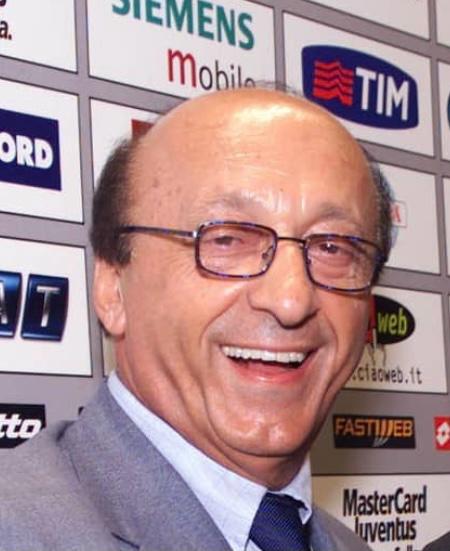
Director Moggi, the United States has been investing heavily in soccer in recent years. How do you see the growth of American soccer today compared to European soccer?
«I must say that in recent years, some interesting players have emerged who have also had the opportunity to play in European leagues. Some of them are doing well, but they obviously aren't the majority yet. Italian soccer, for example, remains more professional and competitive overall. There are some very solid teams, such as those we've seen over time with major teams like Juventus, but overall, the level of American soccer still can't compare to that of the major European leagues.»
In recent years, many Italian and European players have chosen to go and play in the United States. Is this a late-career decision, or is there a broader sporting project?
«In most cases, it's a late-career decision. Players come to the United States after having already given a lot in Europe and are looking for environments where they can continue playing with less pressure and often with very attractive financial conditions. The United States attracts professionals and great champions, but in most cases it's a personal and economic choice, rather than a structured sporting project.»
Do you think American clubs will one day be able to truly compete with European ones?
«"To be honest, I'd say no today. Soccer in the United States is mostly followed by young people and is growing, but it still doesn't have a structure comparable to that of the major European clubs. Other sports are much more deeply rooted in American culture. Of course, everything can evolve over time, but for now the gap remains significant."»
What's the biggest difference between the way you experience soccer in Italy and the United States?
«It's above all a cultural issue. In Italy, football is part of everyday life, almost sacred. It's experienced from Monday to Sunday, with discussions, controversies, and passions. It's a social phenomenon even before it's a sporting one.
In the United States, however, the approach is very different, more modern and organized. Stadiums, for example, are integrated with shops, restaurants, and family services. The game becomes a complete entertainment experience. From this perspective, America is far ahead of Italy.»
Could a real football school emerge in the United States, like it does in Europe?
«It's hard to say. American soccer is certainly growing and moving closer to the European model, but the sporting mentality is different. In Italy, soccer is experienced with an almost religious continuity. In America, however, it's still an evolving sport, struggling to find its own identity.»
You lived through a time when Serie A was the strongest league in the world. What memories do you have of those years?
«Those were extraordinary years. Italian football was at the center of the international scene. I remember with great emotion the 2006 World Cup won by Italy in Berlin against the French national football team. It was an unforgettable moment.
The quality of the players in our league was incredible. The teams had world-class players, and every match was a top-level challenge."»
How has Italian football changed since those years?
«"A lot has changed. Our league was once the most exciting and competitive in the world. Today, it's more regulated and less open than in the past. As a manager, I've carefully navigated this transition: Italian football remains important, but it no longer has the international prominence it once had."»
If you had to give one piece of advice to American soccer executives, what would it be?
«"The main piece of advice concerns youth development. As in life, we need to invest in young players and their development. Champions aren't born by chance: they must be nurtured, supported, and guided by competent managers. Without a strong foundation, no football movement can truly grow."»
This summer, the United States will host a major international competition. What are your expectations for this event?
«"It will certainly be an important moment for American soccer. Events like this bring visibility, audiences, and media attention. It could also be an opportunity to discover new talent and further strengthen the soccer movement in the United States."»
Is there anything you regret about your career? And what has been your greatest satisfaction?
«"There is one regret: seeing Italian football managed at times by people who lacked the necessary experience. This has also had consequences at the international level, as demonstrated by the national team's difficulties in recent years.
There are many rewards, however. Having helped build competitive teams and lived through a period when Serie A was considered the best league in the world remains a source of great pride for me.»
Today, global football continues to transform. Between European tradition and new American ambitions, the game's future seems increasingly international. But as Moggi reminds us, the true strength of every football movement remains one: "nurturing young players and building over time." From there, as always, champions are born.