March 10, 1946 – March 10, 2026
The threshold of democracy
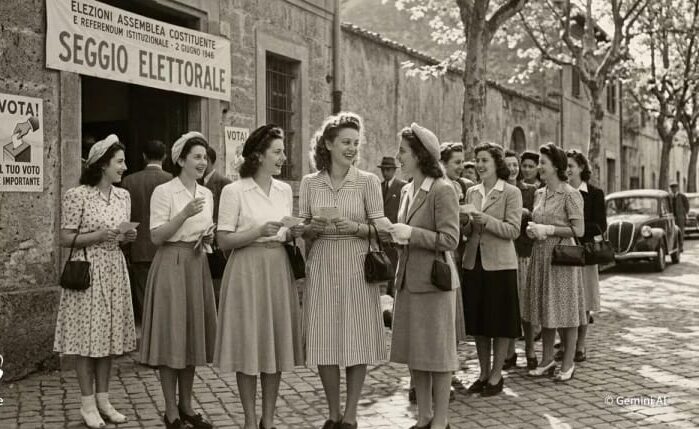
There are dates that aren't simply anniversaries. They are thresholds of history: moments when a community ceases to be what it once was and begins to become something new. March 10, 1946, belongs to this category. On that day, for the first time in national history, the Italian women participated in the local elections.
It wasn't just the extension of the right to vote. It was the birth of a new idea of citizenship.
Italy was emerging from war and dictatorship, and had to rebuild not only its cities and institutions, but also the very meaning of democratic life. At that decisive moment, a simple and revolutionary conviction matured: freedom could no longer be selective. It had to belong to everyone.
The Freedom Cards
Many women came to vote, bringing with them an experience that had remained invisible to politicians for years. During the war, they had worked in factories and fields, supported their families, and participated in the Resistance and civil solidarity networks.
When they picked up the ballot, they weren't just making a formal gesture. They entered the nation's public life.
For millions of Italian women, it was a moment filled with emotion and awareness: a right that had been achieved elsewhere for decades was finally becoming a reality in our country.
The Republic that is born
That first vote was just the beginning. A few months later, on June 2, 1946, women participated in the institutional referendum that would sanction the birth of the Republic and the election of the Constituent Assembly.
For the first time in Italian history, women also entered parliamentary institutions. Twenty-one women were elected to contribute to the drafting of the Constitution.
It wasn't a symbolic detail. It was a decisive step. The new Italian democracy was born with a broader vision, capable of encompassing experiences, sensitivities, and needs that until then had remained marginalized.
A path still open
Eighty years may seem like a short time on the grand scale of history, but they have been enough to profoundly transform the face of Italian society.
Over the past decades, women have gained ground in politics, economics, culture, research, and institutions. They have helped change the language of public life and brought new issues to the forefront of debate: work, equal pay, maternity protection, the fight against violence, and the recognition of rights.
Yet the history of democracy is never over. Each generation is called to preserve and renew the conquests of the past.
The promise of democracy
Looking back at that March morning in 1946, we understand the deeper meaning of that day: it was not just the entry of women into politics.
It was the entrance of democracy in its fullest form.
Because a Republic is truly one only when all its citizens can participate in the life of the community. And from that moment, Italy finally began to become a full democracy.
As one of the fathers of the Italian Constitution recalled:
“Freedom is like air: you realize its value when it starts to disappear..” — Piero Calamandrei.